
How to Choose a Safe and Sturdy Nursery Cot for Newborns (UK 2026 Guide — Parent Friendly)
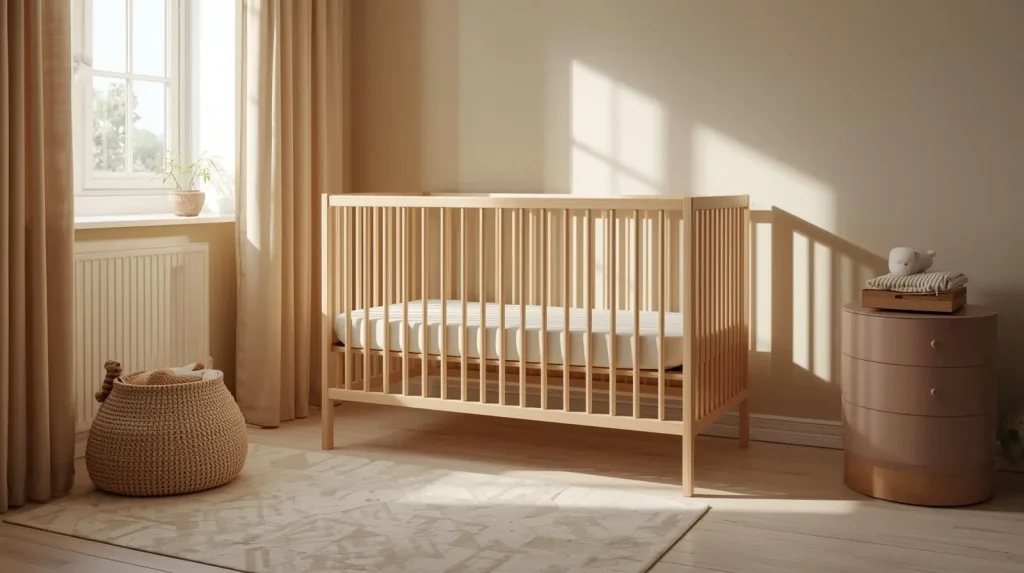
Getting ready for a new baby is exciting, but choosing the cot can feel surprisingly stressful. It’s one of the few items your baby will use every single day, and it needs to be safe, sturdy and comfortable — without the overwhelming list of “extras” retailers try to sell you.
If you’re a first-time parent, or even if you’re starting again with baby number two or three, you may be asking the same questions we hear all the time:
- Is this cot actually safe?
- Does the mattress matter?
- Why are some cots £120 and others £600?
- Can newborns sleep in a cot straight away?
This guide breaks everything down simply, based on UK safety rules, child-sleep experts, and what real parents say makes the biggest difference.
1. Why the Cot Matters More Than You Think
Your newborn will spend more time in their cot than anywhere else for the first months of life. A good cot supports:
- Their breathing
- Their posture and spinal development
- Their temperature regulation
- Safe sleep routines
A few key decisions — slat spacing, mattress fit, materials — have a direct impact on safety. The good news? Once you know what to look for, choosing the right cot becomes surprisingly easy.
2. UK Cot Safety Standards: What Parents Should Check First
Before worrying about colours or styles, make sure the cot meets the UK safety standard BS EN 716. This is the rulebook that ensures cots sold in the UK are safe for newborns and older babies.
Look for the following on the label or product page:
- “BS EN 716 compliant”
- UKCA or CE mark
This tells you the cot has passed checks for:
- Correct slat spacing
- Strong construction
- Safe height of corner posts
- No sharp or protruding parts
- Safe materials and finishes
- Secure base and side panel design
Slat spacing: must be 6.5 cm or less — wide gaps are a hazard.
Drop-side cots: banned. If a second-hand cot has a drop side, don’t use it.
Mattress rules (BS 1877-10 & BS 7177):
The mattress should be:
- Firm
- Flat
- Fire-safe
- Designed for the exact cot size
For safe sleep guidelines, the Lullaby Trust remains the gold standard in the UK.
3. The 7 Key Things to Look For When Choosing a Cot
Lots of cots look beautiful online, but that doesn’t mean they’re safe or practical. These are the features that matter most.
1. A Strong, Stable Frame
When you gently shake the cot, it shouldn’t wobble or creak.
Signs of good build quality include:
- Solid wood or good-quality engineered wood
- Tight, flush screws
- No movement in the joints
- A stable feel even when pressure is applied
A well-built cot also lasts longer and is quieter during night wakings.
2. A Mattress That Fits Perfectly
This is one of the biggest newborn safety points.
A safe mattress should:
- Fit tightly, with no more than a tiny gap
- Stay firm when pressed
- Sit flat against the base
- Not lift at the corners
A mattress that feels “cosy soft” to adults is often unsafe for babies. Newborns need firmness to keep their airways clear.
3. Adjustable Base Heights
Most good cots offer two or three base positions.
- Higher setting: perfect for newborns (saves your back!)
- Lower setting: for rolling or sitting babies
- Lowest setting: once they can pull themselves up
If you want a cot that will last into toddlerhood, adjustable heights are essential.
4. Vertical, Evenly Spaced Slats
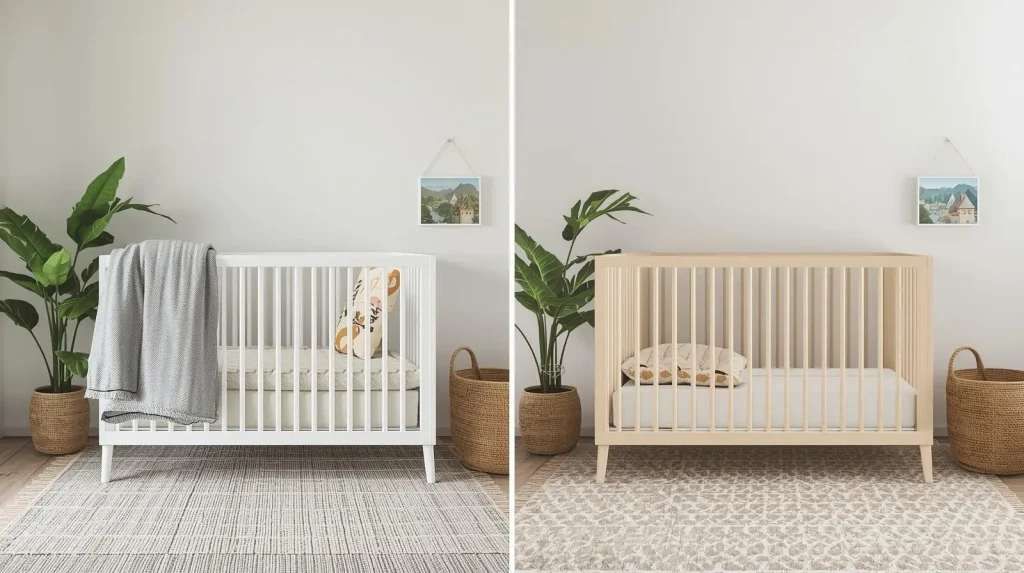
Slats should always be vertical, not horizontal.
Toddlers use horizontal bars like ladders.
Check that slats are:
- Smooth
- Evenly spaced
- Strong
- Free from rough edges
5. Baby-Safe Paint & Materials
Babies chew the rails — it’s normal.
Choose a cot with:
- Non-toxic paint
- Low-VOC finishes
- No chemical smell when unboxed
- Solid wood if possible
- EN 71-3 tested coatings
If a cot has a strong paint smell, let it air out for several days before use.
6. A Simple, Breathable Design
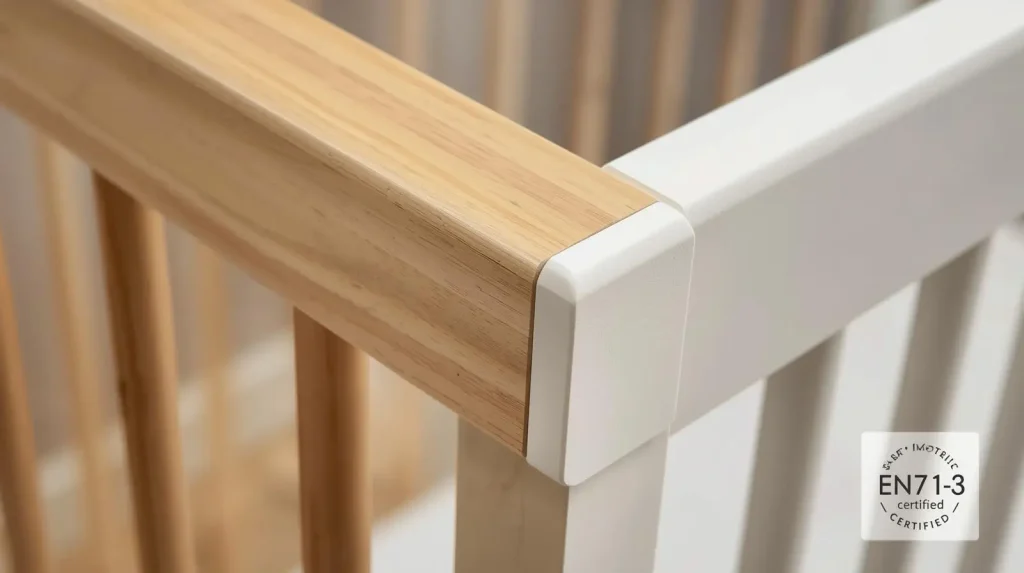
A safe cot looks surprisingly plain.
Avoid:
- Padded bumpers
- Soft toys
- Pillows
- Loose blankets
- Extra thick bars or sides
These items increase risks, especially in newborns. A safe cot is flat, firm, and uncluttered.
7. Wheels: Only If They Fully Lock
Cots with wheels can be convenient, but only if:
- All wheels lock securely
- The cot doesn’t move when locked
- The wheels feel durable, not flimsy
If you plan to move the cot around the room often, wheels can help. Otherwise, a fixed cot is generally more stable.
4. Cot Types Explained: Which Works Best for Newborns?
Every family’s space, budget, and routine are different. Here’s how each cot type compares.
Standard Cot (Most Common)
- Typically 120×60 cm
- Affordable
- Sturdy
- Suitable from birth to ~2 years
Best for parents who want a simple, reliable option.
Cot Bed (Converts Into a Toddler Bed)
- Larger: 140×70 cm
- Converts into a toddler bed
- Lasts until around age 4
Costs more upfront but saves money long-term.
Mini Cot / Space-Saver Cot
- Ideal for small bedrooms or flats
- Comfortable for the first 6–12 months
- Lighter and easier to move
A great short-term solution.
Co-Sleeper Cot (Not a Bedside Crib)
Co-sleeper cots look like standard cots, but can be set near your bed.
Make sure it:
- Meets BS EN 716
- Has a full fourth side
- Can stand independently
Not to be confused with bedside cribs, which follow different rules and are only suitable up to around 6 months.
5. Cot Red Flags Parents Often Don’t Notice
Some safety issues are easy to miss — especially when shopping online.
Watch out for:
❌ Gaps wider than a finger between mattress and frame
This is an entrapment risk.
❌ Wobbly or lightweight frame
Often a sign of weaker construction.
❌ Drop-side design
No longer legal in the UK.
❌ Chunky bumpers or soft furnishings
Not safe, regardless of branding.
❌ Missing screws or replaced parts in second-hand cots
Every component matters.
❌ Soft, squishy mattress
Newborns must sleep on a firm, flat surface.
6. Safe Sleep Setup: The Essentials for Newborns
Following a safe sleep routine is just as important as choosing the cot.
The Lullaby Trust recommends:
- Always place baby on their back
- Use a firm, flat mattress
- Keep toys, bumpers and pillows out of the cot
- Keep the room 16–20°C
- Use the feet-to-foot position
- Keep baby in the same room as parents for the first 6 months
Even the best cot is unsafe if filled with soft or loose items.
7. Are Second-Hand Cots Safe? Yes — with Rules.
Second-hand cots can be a great way to save money, but be selective.
Safe when:
- All original parts are included
- The cot passes the wobble test
- It meets BS EN 716
- You buy a new mattress
- The finish isn’t peeling
Unsafe when:
- It’s a drop-side design
- Wood is weakened or cracked
- There are missing screws
- The mattress is old or stained
Always inspect a second-hand cot in person if possible.
8. When Should a Baby Stop Using a Cot?
There isn’t one universal age — the switch to a bed depends on your child.
A cot becomes unsafe when your child:
- Is around 85 cm tall
- Tries to climb out
- Can stand and lean over the side rails
- Makes the cot shake when pulling up
Most toddlers transition somewhere between 18 months and 3 years.
FAQ: How to Choose a Safe and Sturdy Nursery Cot for Newborns
Yes — a newborn can sleep in a cot from birth, and many families prefer starting this way. As long as the cot meets BS EN 716, has a firm mattress that fits tightly, and the sleep space is kept clear of soft items, a cot is one of the safest places for a newborn to sleep. There’s no need for a small Moses basket unless you want the portability.
No. A cot bed may look large, but size does not affect newborn safety. What matters is that the mattress is firm and flat, the cot is certified, and the sleep environment is kept simple. Many parents choose cot beds specifically so they don’t have to buy another bed later.
Both standard cots (120×60 cm) and cot beds (140×70 cm) are equally safe for a newborn. Choose based on your room size and how long you want the cot to last. If space is tight, a mini cot can work well for the first months, but it won’t last as long.
The safest mattress is firm, flat, breathable, and sized exactly to the cot. It must meet BS 1877-10 and BS 7177. Avoid memory foam for newborns — it sinks too much and can affect a baby’s breathing position. A good mattress should spring back immediately when pressed.
No. Cot bumpers are not recommended in the UK because they reduce airflow and can lead to overheating or entanglement. The safest cot setup is simply a firm mattress and a fitted sheet — nothing else.
Most safe, well-built cots cost £120–£250, while cot beds range from £180–£400. Higher prices often reflect design rather than safety. As long as the cot is BS EN 716 compliant, it meets the required safety standard regardless of price.
Yes, as long as the cot is structurally sound and you buy a new mattress. Avoid old drop-side cots, cots with peeling paint, and anything missing parts. Safety standards have changed over the years, so check the model’s compliance before using it.
Newborns can sleep in a Moses basket, crib, or bedside crib for the early months, but all of these are temporary solutions. A cot is the most long-term and cost-effective option, and many babies sleep in one from night one.
Lower the mattress as soon as your baby shows signs of rolling, pushing up on hands, or sitting. This usually happens between 3–6 months. Once your baby can pull up to stand, the mattress should be at the lowest level.
